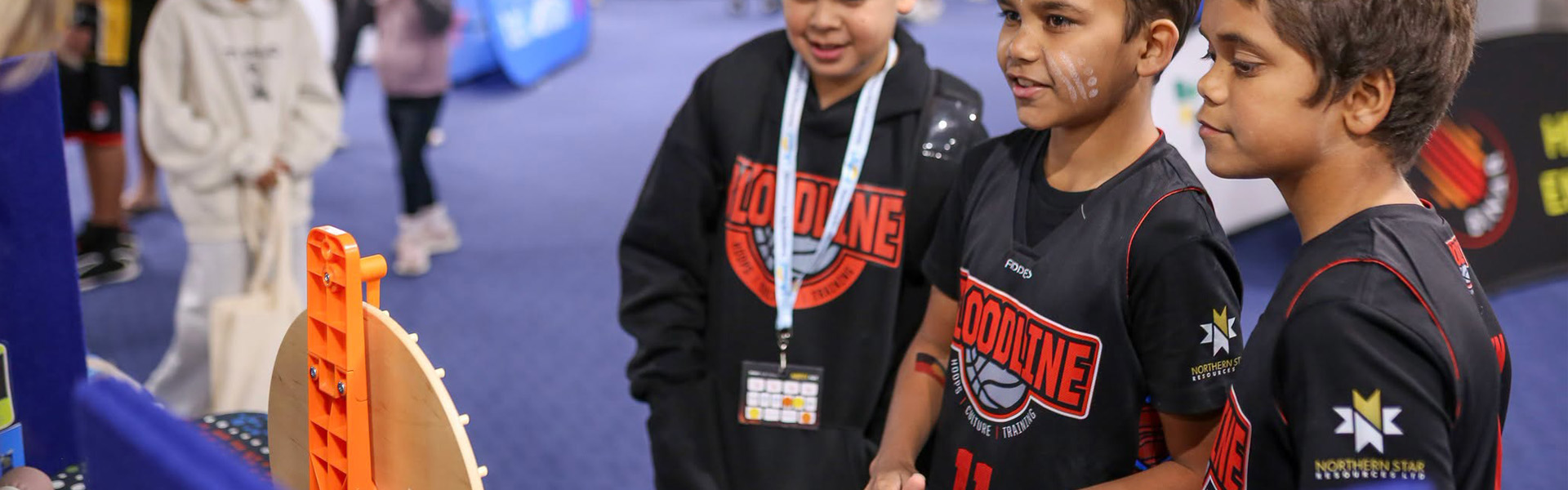
National Aboriginal and Torres Strait Islander Children's Day is a chance to celebrate the next generation and recognise the important role young people play in their families, communities and futures.
This year’s theme, Living Our Truth, is about listening to young people and valuing the knowledge, perspectives and experiences they bring. It’s also a reminder that learning doesn’t only happen one way.
Living Our Truth celebrates the voices, stories and knowledge of Aboriginal and Torres Strait Islander children, families and communities. It recognises the importance of truth-telling, identity, belonging and cultural strength, and honours the role of Elders and communities in passing knowledge to future generations.
At Respiratory Care WA, we’ve learned that some of the most meaningful health conversations don’t start in a clinic. They start with a young person.
Since partnering with Binar Futures through its Health Embassies program in 2024, we’ve had the opportunity to connect with Aboriginal and Torres Strait Islander young people and their families across Western Australia, discussing respiratory health, asthma, vaping, smoking and overall wellbeing.
What has stood out most isn’t what happens during an event. It’s what happens afterwards.
”When we talk about respiratory health with young people, we're rarely talking to just one person. Young people take those conversations home."
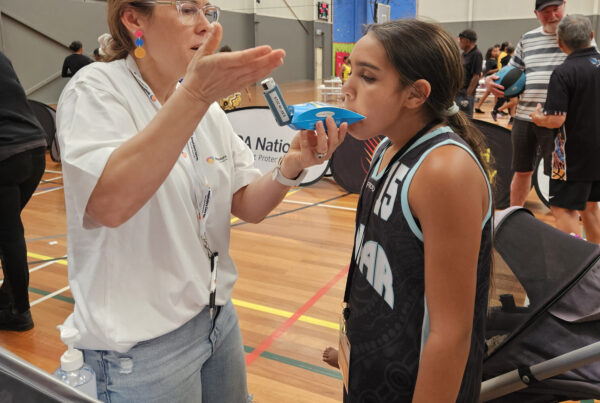
Binar Futures Health Embassy Albany, 2026. Photography by Respiratory Care WA
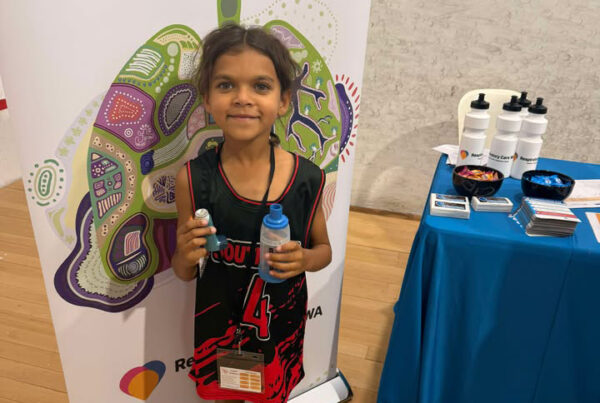
They share what they’ve learned with parents, grandparents, carers and siblings. They ask questions. They challenge misconceptions. They start conversations about asthma, vaping, smoking and respiratory symptoms that may never have happened otherwise.
That’s why investing in young people can have such a powerful ripple effect. By improving health literacy in one generation, we’re helping build awareness, understanding and healthier behaviours in the generations around them.
We’ve seen this firsthand.
The impact of Binar Futures Health Embassies
At this year’s Binar Futures Basketball Tournament and Health Embassy in Albany, our team connected with almost 500 participants and family members over two days.
“It was fantastic to reconnect with families we’d met at previous Health Embassies and see that the messages had stayed with them,” said Respiratory Care WA Community Outreach Coordinator, Melanie Preen.
“What really stood out was hearing young people confidently talk about asthma, triggers and respiratory health months, and sometimes years, after our initial conversations.”
”That's the power of early health education. When young people understand the information, they take it home, share it with family and help keep those conversations going. For us, that's a reminder that health education isn't about delivering a message and moving on. It's about building understanding over time."
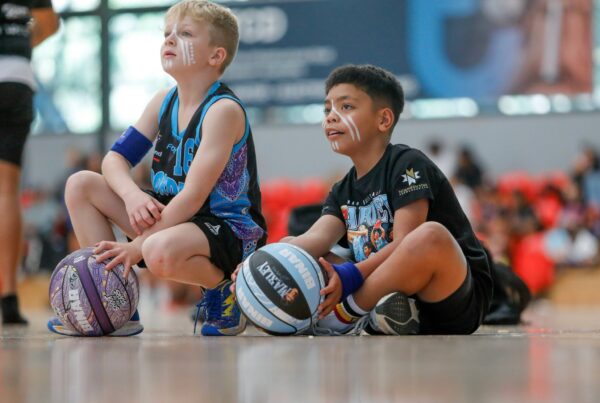
Photo courtesy of Binar Futures at Bendat Basketball Centre, 2026. Photography by Halim Mellick
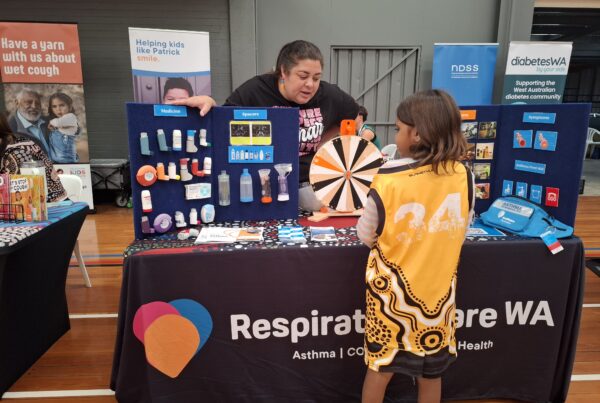
Binar Futures Health Embassy Albany, 2026. Photography by Respiratory Care WA
Respiratory disease continues to have a significant impact on Aboriginal and Torres Strait Islander peoples. According to the Australian Institute of Health and Welfare (AIHW), in 2022–23 an estimated 31% of First Nations people (around 310,900 individuals) were living with a long-term respiratory disease, while respiratory diseases remained the fourth leading cause of death among First Nations people between 2019 and 2023. These figures highlight the importance of ensuring families have access to trusted health information, culturally appropriate resources and support.
Programs like the Binar Health Embassies create opportunities to start these conversations early, in spaces where young people feel comfortable, engaged and curious.
This National Aboriginal and Torres Strait Islander Children’s Day, we’re celebrating the influence young people have not only on their own futures, but also on their families, communities and future generations.
Because sometimes the most important health conversations don’t start in a clinic.
When young people are supported to learn, share knowledge and stay connected to their families and communities, they help carry forward the strong voices, stories and knowledge that shape healthier futures.